
Abandoned Cart Flow Strategy: Why Your Recovery Sequence Stops Working After Email One

Your abandoned cart flow isn't underperforming — emails two and three are. Email one fires while purchase intent is hottest and carries most of the flow's revenue, which inflates your aggregate recovery rate. Emails two and three collapse because they repeat email one's reminder to a colder audience instead of doing a different persuasion job.
This guide shows you how to diagnose exactly where your sequence dies inside Klaviyo, then rebuild it so each email has one distinct conversion job: friction removal, objection handling, and an alternative path. If your flow isn't live yet, start with our abandoned cart email strategy fundamentals — this article assumes the flow exists and picks up where setup ends.
Last updated: July 2026
Why Do Abandoned Cart Emails Stop Working After the First Email?
Abandoned cart emails stop working after email one because purchase intent decays quickly and most sequences ignore it. Email one reaches a shopper still in buying mode. Emails two and three reach someone whose urgency has faded — and then repeat the same reminder message that already failed to convert them once.
Here's the trap: Klaviyo reports your cart flow as one rolled-up number. One recovery rate, one revenue figure. That aggregate looks healthy because email one — sent within the hour, to someone who was just holding the product in their cart — does most of the earning. The flow isn't fine. Email one is fine.
Purchase intent decay is the predictable decline in a shopper's likelihood to complete a purchase as time passes after an abandonment event. The shopper who gets your one-hour email is interrupted mid-decision. The shopper who gets your 48-hour email has moved on, compared alternatives, or talked themselves out of it. Same person, different buyer.
A cart abandonment flow is a triggered email automation that sends a timed sequence to shoppers who added items to their cart but exited before completing checkout. It's typically the highest revenue-per-recipient flow in an ecommerce email program — which is exactly why a broken second half costs so much.
Cart abandonment flows convert 5-12% of recipients and generate $5-15 in revenue per recipient according to Blossom's benchmark data — but that aggregate is carried disproportionately by email one, sent when intent is hottest.
Most sequences make the colder audience problem worse by sending the same email three times. "You left something behind" at one hour. "You still left something behind" at 24 hours, now with a discount. "Last chance on the thing you left behind" at 72 hours, with a bigger discount. That's not a sequence — it's one email with escalating desperation.
The intent gap also explains why cart messaging can't be recycled from your browse abandonment flow: browsers only looked, cart abandoners declared intent, and the persuasion work is different for each. Abandonment itself is a structural feature of ecommerce — Baymard Institute maintains a long-running library of checkout research on why shoppers bail — but recovery is a sequencing problem, and sequencing is fully in your control.
How Do You Diagnose Where Your Cart Flow Is Breaking?
Pull per-message analytics in Klaviyo — open rate, click rate, and placed order rate for each email individually — then read where the drop happens. An open-rate collapse points to timing or subject lines. A click collapse points to copy that repeats itself. A conversion collapse points to your offer or an unhandled objection.
Klaviyo Flows is the platform's automation builder, where triggered sequences like cart recovery are configured, timed, and — critically for this diagnosis — reported message by message. Two metrics inside that reporting do the heavy lifting, so define them precisely. Placed order rate is the percentage of a message's recipients who complete a purchase within the attribution window — Klaviyo reports it per message, which is exactly what makes per-email diagnosis possible. Revenue per recipient (RPR) is total revenue attributed to a message divided by the number of people who received it — the cleanest measure of what each email in your sequence actually earns.
Run the diagnosis like this:
- Open the flow in Klaviyo and view analytics for each message individually — not the flow-level rollup. Klaviyo's flow analytics documentation walks through where per-message reporting lives.
- Record open rate, click rate, placed order rate, and RPR for emails one, two, and three.
- Calculate the relative drop between adjacent emails. Compare email two against email one's numbers, not against your list average.
- Find the steepest drop and map its location to a failure type using the pattern below.
- Check what share of total flow revenue email one carries. If it's nearly all of it, you don't have a flow — you have one good email and two passengers.
Reading the Drop-Off Pattern
- Open rate collapses between emails: a timing or subject-line problem. Either the delay is wrong for your product's consideration cycle, or email two's subject line reads as a rerun of email one and gets skipped on sight.
- Opens hold, clicks collapse: a copy and angle problem. The reader opened, recognized the same pitch they already declined, and left. The email needs a new persuasion job, not a louder version of the old one.
- Clicks hold, conversions collapse: an offer or objection problem. The reader returned to the cart and still didn't buy — something specific is stopping them, and your email never addressed it.
Some decay across a sequence is natural: each later email only reaches the people earlier emails failed to convert, so the audience gets progressively harder. In our experience with DTC clients, a healthy sequence sees email two retain a substantial share of email one's placed order rate, and email three retain a similar share of email two's. What you're hunting for is a cliff, not a slope — email two converting at a small fraction of email one's rate isn't decay, it's a design flaw. Diagnose which type of cliff you have before touching a single subject line, because each failure type has a different fix.
What Persuasion Job Should Each Email in the Sequence Actually Do?
Assign each email one distinct conversion job: email one removes friction and restores the path back to the cart, email two handles the specific objection that stopped the purchase, and email three offers an alternative path for shoppers who won't convert on the original terms. No email should repeat the message of the one before it.
Email one's job is friction removal. The shopper was interrupted or hit a snag — shipping cost surprise, a form error, a phone call. This email needs nothing clever: show the cart contents, restore the checkout link, and get out of the way. It works because intent is still warm. This is the email you probably already have, and it's probably fine. Leave it alone.
Email two's job is objection handling. By 24 hours, the shopper who didn't come back after email one has a reason. Your second email needs to name and neutralize that reason — which means you need to know what it is. For most stores, the objection is one of a short list:
- Price uncertainty: "Is this worth it?" — answered with social proof, review counts, or a comparison against the cheaper alternative they're considering.
- Shipping and returns anxiety: "What if it doesn't work out?" — answered with your return window, free-returns policy, or delivery timeline stated plainly.
- Trust deficit: "Is this brand legit?" — answered with guarantees, press mentions, or customer photos, especially for first-time visitors.
- Fit or spec doubt: "Is this the right one for me?" — answered with sizing guides, use-case breakdowns, or a link to support.
Pick the objection that dominates your category and build email two around it. A skincare brand's email two should read completely differently from a furniture brand's, because the reason people hesitate is completely different.
Email three's job is the alternative path. This shopper has declined a reminder and an objection-handler; a third repetition earns an unsubscribe. Instead, change the offer shape: suggest a related product at a lower price point, offer a smaller size or starter version, or route them to a quiz or bestseller collection. If you use an incentive here, make it the first and only discount in the sequence — and understand what repeated discounting trains. Discount fatigue is the learned expectation that abandoning a cart reliably produces a coupon, which conditions shoppers to abandon on purpose and wait. Its financial consequence is margin erosion — the gradual decline in per-order profit as discounts shift from occasional incentive to de facto price. Escalating coupons across emails one, two, and three accelerates both.
Structured this way, the three emails stop competing for the same converter and start working different segments of the abandoned audience — the interrupted, the hesitant, and the not-quite-right-fit. The same job-assignment logic applies downstream too: your post-purchase flow should hand off cleanly from whichever cart email converted, rather than restarting the relationship from zero.
How Do You Set Timing and Segmentation for Emails Two and Three?
Match send delays to your product's consideration cycle — faster for impulse-priced goods, slower for considered purchases — and use Klaviyo's splits and filters to route different abandoners to different messages instead of blasting one sequence at everyone.
Timing first. There is no universal schedule, but the anchor points are consistent: email one inside the first hour while intent is hot, email two at 20-24 hours when the objection has formed but the cart is still memorable, and email three at 48-72 hours as the closing move. For high-ticket or considered products — furniture, mattresses, equipment — stretch email three to day four or five, because the decision genuinely takes that long and a 48-hour "last chance" reads as false urgency. Shopify's abandoned cart research consistently shows the first email doing outsized work precisely because of that first-hour window — which is more reason, not less, to make the later sends earn their place.
Segmentation is where the rebuilt sequence compounds. Klaviyo conditional splits are branch points inside a flow that route recipients down different paths based on profile properties or past behavior — for example, sending first-time visitors a trust-building email two while repeat customers skip straight to a lighter reminder. Alongside them, flow filters and trigger splits are Klaviyo's entry-and-exit controls: filters remove people who no longer qualify at each step (someone who purchased after email one should never receive email two), while trigger splits branch the flow at entry based on properties of the abandonment event itself, such as cart value or product category.
The highest-leverage splits for a cart flow, in rough order of impact:
- Purchase filter on every message: the non-negotiable. "Has placed order zero times since starting this flow" prevents the embarrassing post-purchase discount email.
- Cart value split: high-value carts justify a longer, discount-free sequence and maybe a personal outreach step; low-value carts can move faster and close sooner.
- New vs. returning customer split: returning customers don't need trust-building content, and giving new-customer discounts to loyal buyers is pure margin erosion.
- Category split: if your objections differ sharply by product line, branch email two so each category gets its relevant objection-handler.
Don't build all four splits on day one. Start with the purchase filter and one split — whichever maps to your biggest revenue concentration — and add branches only when the simpler version is measurably working. If segmentation logic is new territory, our email segmentation strategy guide covers the underlying framework these splits are built on.
How Do You Test and Measure the Rebuilt Sequence?
Rebuild one email at a time, hold the others constant, and judge each change by that message's placed order rate and RPR — not the flow's aggregate recovery rate. The aggregate is what hid the problem in the first place.
The testing order follows the diagnosis. If your cliff was at email two, fix email two first and leave emails one and three untouched for a full measurement cycle — usually two to four weeks depending on your abandonment volume, since cart flows need enough recipients per message for the numbers to stabilize. Changing all three emails simultaneously feels productive but destroys your ability to attribute the improvement.
Watch three things as the new sequence accumulates data:
- Per-message RPR movement: the rebuilt email should close the gap against its predecessor. Email two moving from a small fraction of email one's RPR to a meaningful share of it is a structural win even if aggregate recovery barely moves at first.
- Revenue distribution across the flow: the share of flow revenue carried by email one should fall as emails two and three start earning. A flow where email one carries nearly all of the revenue is fragile; in our experience, a healthy flow still leans on email one but sees emails two and three earn a meaningful minority share.
- Unsubscribe and spam rates per message: if email three's unsubscribe rate spikes after the rebuild, your alternative-path offer isn't landing as an alternative — it's landing as a third repetition.
Resist the urge to add a fourth or fifth email until the first three each justify their existence. More sends into a colder audience without new persuasion jobs just recreates the original problem further down the timeline.
Frequently Asked Questions
How many emails should an abandoned cart flow have?
Three is the right default for most DTC stores: a friction-removal reminder, an objection-handler, and an alternative-path close. Add a fourth only for high-consideration products with long decision cycles, and only after emails two and three are demonstrably earning revenue on their own. More emails without distinct jobs just accelerates unsubscribes.
When should each abandoned cart email be sent?
Send email one within the first hour, while purchase intent is still hot. Send email two at 20-24 hours, when the shopper's objection has formed but the cart is still memorable. Send email three at 48-72 hours for impulse-priced goods, or day four to five for considered purchases like furniture or equipment, where a fast "last chance" reads as false urgency.
Should every abandoned cart email include a discount?
No. Escalating discounts across the sequence train discount fatigue — shoppers learn to abandon deliberately and wait for the coupon — and drive margin erosion. Keep emails one and two discount-free (reminder and objection-handling respectively), and if you use an incentive at all, make it a single offer in email three, ideally reserved for high-value carts or first-time buyers via a conditional split.
Why does my cart flow's recovery rate look fine when emails two and three barely convert?
Because Klaviyo's flow-level rollup blends all messages into one number, and email one — sent when intent is hottest — carries most of the revenue. The aggregate hides the collapse. Always evaluate the flow at the per-message level using placed order rate and revenue per recipient for each email individually.
How do I stop cart emails from sending to people who already purchased?
Add a flow filter of "has placed order zero times since starting this flow" and ensure Klaviyo re-checks it before every message in the sequence, not just at entry. This removes converters at each step, so someone who buys after email one never receives email two — and never sees a discount for something they already paid full price for.
Need help implementing this?
Let us take the hassle of managing your email marketing channel off your hands. Book a strategy call with our team today and see how we can scale your revenue, customer retention, and lifetime value with tailored strategies. Click here to get started.
Curious about how your Klaviyo is performing?
We’ll audit your account for free. Discover hidden opportunities to boost your revenue, and find out what you’re doing right and what could be done better. Click here to claim your free Klaviyo audit.
Want to see how we’ve helped brands just like yours scale?
Check out our case studies and see the impact for yourself. Click here to explore.

Read Our Other Blogs

Back-in-Stock Flow: The Highest-Intent Email Sequence Most Brands Never Build



Klaviyo Predictive Analytics: How to Use CLV, Churn Risk, and Expected Next Order Date to Drive Retention

Email Holdout Testing: How to Prove Your Retention Channel Is Actually Incremental

Gmail and Yahoo Bulk Sender Requirements: The Compliance Checklist Ecommerce Brands Can't Ignore

Spam Complaint Rate: Why 0.3% Is the Cliff Edge and How to Stay Far Below It

Klaviyo Custom Events: How to Track the Ecommerce Behaviors Shopify Doesn't Send by Default

Klaviyo vs Postscript: Choosing Your SMS Platform When You're Already on Klaviyo Email

Repeat Purchase Rate: The Diagnostic Framework for Finding Where Your Second Order Is Breaking Down
Apple Mail Privacy Protection: How to Measure Email Engagement When Opens Are Broken
Back-in-Stock Flow: The Highest-Intent Email Sequence Most Brands Never Build
Klaviyo Predictive Analytics: How to Use CLV, Churn Risk, and Expected Next Order Date to Drive Retention
Email Holdout Testing: How to Prove Your Retention Channel Is Actually Incremental

Klaviyo vs Omnisend: Which ESP Is Right for Your DTC Brand in 2026

Dedicated IP vs Shared IP for Ecommerce Email: When to Switch and When It Backfires

Quiz Funnels for Ecommerce: How to Grow Your List and Segment Subscribers Without Discounts

Klaviyo + Shopify Integration: The Complete Data Sync and Event Tracking Setup Guide

How to Repair Sender Reputation: The Recovery Playbook When Your Emails Land in Spam

Ecommerce Email Benchmarks: What Good Actually Looks Like for DTC Brands in 2026
Retention-Focused A/B Testing: What to Test in Email When You've Already Optimized the Basics

Klaviyo Segments vs Lists: How to Structure Your Audience Architecture for Scalable Retention

Email Deliverability for Ecommerce: The Complete Guide to Landing in the Inbox

Klaviyo List Hygiene: How to Clean Your Email List Without Killing Your Revenue

Sunset Flow: How to Win Back Unengaged Subscribers Before You Suppress Them

Welcome Flow Optimization: How to Turn New Subscribers Into First-Time Buyers Faster

Popup Strategy for Ecommerce: How to Grow Your List Without Training Customers to Wait for Discounts

Email Offer Architecture: How to Structure Promotions That Protect Margin and Still Convert

Klaviyo vs Attentive: Which Platform Is Right for Your DTC Stack in 2026

Migrating to Klaviyo: The Step-by-Step Playbook for Switching ESPs Without Losing Revenue

Browse Abandonment Flow: The Underbuilt Sequence Quietly Leaking Revenue

Post-Purchase SMS Flow: How to Use Text Messages to Build Loyalty After the First Order

Retention Marketing Dashboard: The Exact Metrics and Reports You Should Be Reviewing Weekly

Agency vs In-House Email Marketing: What Actually Moves the Needle for DTC Brands

SMS Marketing Strategy for Ecommerce: The Complete Guide

How to Set Up Klaviyo Flows: Complete Setup Guide

A/B Testing for Email: What to Test, How to Measure, When to Ship

Email Marketing KPIs: The Only Metrics That Matter for DTC

Email Revenue Attribution: What Klaviyo Gets Right and Wrong

Popup Strategy for Ecommerce: 6 Types That Actually Convert

RFM Analysis for Ecommerce: Segment Your Customers by Value

Email Segmentation for Ecommerce: The 5-Layer Model for DTC Brands

Welcome Offer Optimization: Converting Subscribers Without Deep Discounts

Email Warmup Strategy: How to Build Sender Reputation From Scratch

Email List Hygiene: How to Clean Your List Without Killing Revenue

SPF, DKIM, and DMARC: Email Authentication Explained for DTC Brands

The Complete Retention Marketing Strategy Guide (2026)

Winback Flow: How to Re-Engage Lapsed Customers Before You Lose Them

How to Audit Your Email Flows (The 125-Point Checklist)

Post-Purchase Email Flow: The Architecture That Drives Repeat Buyers

Sunset Flow: When and How to Remove Unengaged Subscribers

Cart Abandonment Flow: How to Recover Revenue Without Discounting

How to Build a Welcome Flow That Actually Converts

How to Build an Email Campaign Calendar Without Discounting

Browse Abandonment Flow: Converting Window Shoppers Into Buyers

The Abandoned Cart Email Strategy That Actually Recovers Revenue

How to Build a Welcome Flow That Actually Converts
Personalizing Push Notifications for Better Retention Outcomes
How to Craft Email Newsletters That Build Real Brand Loyalty
Top 3 Best eCommerce Content Management Systems of 2025
Email Marketing vs. Social Media: Which One Should Your Brand Focus On?
Attract More Customers: Which Videos to Use in Your Email Marketing and Why
8 eCommerce Customer Service Mistakes You NEED to Stop Making (Like, Yesterday)
Creating The Perfect E-Commerce Tech Stack

Types of Content eCommerce Brands Need in Their Marketing Mix
Ecommerce Email Mistakes: Blossom Ecom Article on How to Stop Sending Bad Emails & Start Making More Money
Boost Your Bottom Line: The Ultimate Guide to Integrating Website and Email Strategies for Your eCommerce Business
6 Powerful Ecommerce Loyalty Program Examples (and How to Build Your Own)
Loyalty-First Guide to Customer Reactivation Email Campaigns
Using Email Marketing to Supercharge Your Loyalty Program
Unpacking Brand and Conversion in E-Commerce Design
13 Scary E-Commerce Mistakes (and How to Avoid Them)
How to Reduce Your E-Commerce Bounce Rate and Boost Engagement
Combining Content and Commerce for E-Commerce Success
Email Marketing Tips + Trends

E-Commerce Returns Analysis & Crafting a Profitable Returns Policy

9 Pro Tips for A/B Testing Emails with HubSpot
AI and Email Marketing: The Future is Here
How to Skyrocket Your Email Open Rates and Click-Through Rates
Email Isn’t Dead: 4 Reasons It’s Still a Digital Marketing Powerhouse

Email Marketing Series – #3: Building a Strong Email List
Email Marketing Series – #4: 9 Tips for Creating High-Impact Email CTAs

Email Marketing Series – #2: How to Craft Attention-Grabbing Subject Lines
Email Marketing vs. Social Media Marketing — Which Should I Use?
Email Marketing Series – #1: Crafting an Effective Email Marketing Strategy
Email Open Rate: A Practical Guide
3 Effective Strategies to Make Email Your Marketing Heavyweight Champion

How to Attract New Leads with Video in Your Email Marketing
How to Determine the Profitability of Your eCommerce Website
Multi-Channel eCommerce: The Key to Growing Your Online Business
Understanding eCommerce Conversion Rate & Optimization
How to Optimize Your eCommerce Website for More Conversions
Top 3 eCommerce and Digital Marketing Trends for 2025

Optimizing Your Email Marketing Strategy: A/B Testing Explained
35 Eye-Opening Email Marketing Stats You Need to Know
7 Email Marketing Tips to Boost Your SEO
11 Common Email Marketing Mistakes That Are Tanking Your Conversions (And How to Fix Them)
Strategic SEO Tips for Email Marketing: Boost Engagement and ROI
How to Measure and Increase Email Marketing ROI (Plus Templates That Convert!)

Do Lifecycle Email Campaigns Really Drive Conversions? Here’s What We Found
How to Use Remailing in Your Email Marketing Strategy

B2B Email Marketing: Building Relationships and Converting Leads
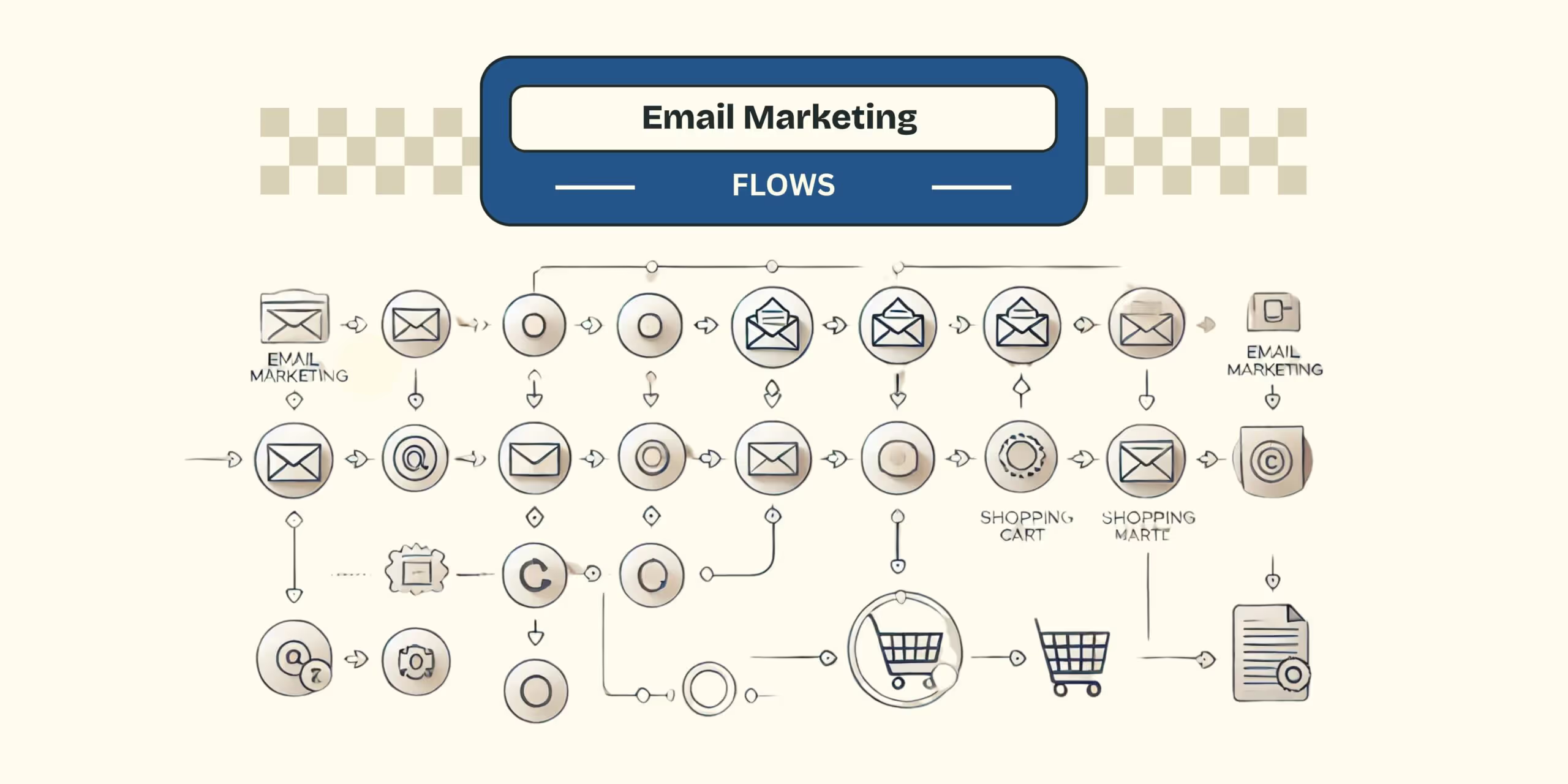
Core Email Marketing Flows: 2025 Essentials for Shopify

Top 5 Revenue-Generating Email Marketing Journeys (Straight from a Klaviyo Partner Agency)
The Long and the Short of It: Getting to “Yes” with Email Marketing


Not Sure Where to Start?
Let's find the biggest retention opportunities in your business. Get a free Klaviyo audit or retention consultation.