

A post-purchase email flow is a structured customer onboarding sequence — its job is to earn the second order, not just confirm the first. A well-built 7-email flow materially influences repeat purchase behavior. Most DTC brands are running a 1-email order confirmation and calling it done.
Here's what that silence costs you: the window between a customer's first and second purchase is the highest-leverage moment in your entire retention program. If you don't fill it with value, education, and a reason to come back, you're leaving the majority of your repeat purchase revenue on the table.
This is the blueprint. Not a list of options — a specific architecture with send timing, Klaviyo conditional split logic, and the benchmarks that tell you whether it's actually working.
What Is a Post-Purchase Flow (And Why Most Are Broken)?
A post-purchase flow is an automated email sequence triggered by a completed order. It runs after the customer buys — not to confirm the transaction, but to onboard them into your brand, build the relationship, and systematically drive a second purchase. Most brands mistake the order confirmation for the flow. It isn't.
Shopify is an e-commerce platform that powers the storefront, order management, and transactional notifications for most DTC brands — including order confirmations, shipping updates, and delivery alerts.
The order confirmation email is transactional. It confirms what happened. The post-purchase flow is what happens after that — the 7-to-30-day window where you either earn a loyal customer or lose them to inertia.
Here's the structural problem: most DTC brands are competing hard to acquire new customers but going silent the moment someone converts. Welcome flows get attention. Cart abandonment flows get attention. The post-purchase window — the highest-intent moment after purchase — gets an order confirmation and a shipping update.
That's the gap this article closes.
Before we get into the architecture, one distinction matters: transactional email is any operational message triggered by a system event — order confirmations, shipping notifications, delivery updates. These are typically sent by Shopify (or your commerce platform) and serve a functional purpose. They are not marketing. Your post-purchase flow in Klaviyo is a separate layer that runs alongside transactional emails — focused on relationship building, product education, social proof, and conversion.
Where Does the Post-Purchase Flow Fit in Your Lifecycle?
The post-purchase flow is the downstream counterpart to your welcome flow. Where the welcome flow onboards a subscriber into the brand before they buy, the post-purchase flow onboards a buyer into the brand after they purchase — moving them from one-time buyer to repeat customer.
The full pre-to-post purchase lifecycle looks like this: a visitor subscribes, enters the welcome flow, converts (or is caught by a cart abandonment flow if they hesitate), and then enters the post-purchase flow the moment an order is placed. Everything after that — winback, replenishment, VIP — is downstream of whether the post-purchase flow does its job.
That means if your post-purchase flow is weak, every downstream flow is working with a smaller pool of engaged repeat buyers. Fix the post-purchase flow first.
For a broader look at how retention email stacks up against paid acquisition, Klaviyo's email marketing benchmarks report provides industry-wide context on open rates, click rates, and revenue per recipient across DTC verticals. For DTC-specific repeat purchase data, Shopify's research on repeat customers outlines why the second purchase is the single most predictive indicator of long-term customer retention.
The Transactional vs. Marketing Email Responsibility Matrix
Shopify and Klaviyo both send post-purchase emails — and without explicit suppression logic, your customer gets double-messaged. Here's who owns what: Shopify owns transactional notifications (order confirmation, shipping confirmation, delivery). Klaviyo owns your marketing flow (brand welcome, product education, review request, cross-sell, replenishment).
Klaviyo is an email and SMS marketing platform built for e-commerce that enables automated flows, audience segmentation, and behavioral triggers based on Shopify order and browsing data.
The three most common overlap mistakes:
- Double order confirmation: Shopify sends an order confirmation email, and Klaviyo's flow also opens with one. The customer receives two nearly identical emails within minutes of purchase. Fix: in Klaviyo, suppress your Email 1 if it replicates Shopify's order confirmation — or skip the order confirmation entirely and open with the brand welcome instead.
- Double shipping notification: Shopify sends a shipping update, and Klaviyo's flow has a shipping-triggered email too. Fix: turn off Klaviyo's shipping email if Shopify is already handling it, or use Klaviyo's suppression to exclude anyone who received a Shopify shipping email in the last 24 hours.
- Competing review requests: Shopify (or a review app like Okendo, Yotpo, or Judge.me) sends a review request on day 7, and Klaviyo's post-purchase flow also sends one on day 10. Fix: designate one platform to own review requests and turn the other off. Don't ask the same customer twice.
Suppression logic is the mechanism Klaviyo uses to prevent duplicate sends. In your flow settings, you can add conditional splits that check whether a specific Shopify email was already sent before firing a Klaviyo email for the same purpose. This is not optional — without it, you're eroding trust at exactly the moment you're trying to build it.
What Should a Post-Purchase Email Flow Include?
A complete post-purchase flow for a first-time buyer should include 7 emails over 30 days: order confirmation or brand welcome, shipping update or content bridge, product education, check-in and review request, cross-sell or complementary product, hard replenishment or second purchase CTA, and a winback trigger if no second purchase occurs.
Here's the full 7-email architecture with send timing and purpose for each:
The 7-Email Post-Purchase Architecture (First-Time Buyer)
- Email 1 — Order Confirmation / Brand Welcome (Immediate): If Shopify is sending the order confirmation, open with a brand welcome instead. Acknowledge the purchase, thank them warmly, and set expectations for what comes next. This is the highest open-rate email in the flow — in our experience, it consistently outperforms every other email in the sequence. Use that attention to begin the relationship, not just confirm the SKU.
- Email 2 — Shipping Update + Content Bridge (Day 2): If you're not relying on Shopify for shipping updates, this is where you send one — with an editorial layer. "Your order is on its way. While you wait, here's how to get the most out of it." This bridges the transactional moment to the educational sequence. If Shopify handles shipping notifications, skip this and open the sequence with brand story content instead.
- Email 3 — Product Education (Day 5): This is the most underbuilt email in most post-purchase flows. What should they know about the product they just bought? Usage tips, care instructions, how to get the best results. This email reduces returns, increases satisfaction, and sets up the review request. For a skincare brand, it's a routine guide. For a supplement brand, it's a protocol and timing guide. For a coffee brand, it's a brew guide.
- Email 4 — Check-In + Review Request (Day 10): "How's it going?" leads naturally into a review ask. The product has been in their hands for 5+ days — they have an opinion. Make the ask frictionless: one-click star rating, direct link to your review platform. This is not a transaction, it's a conversation.
- Email 5 — Cross-Sell / Complementary Product (Day 14): Based on what they bought, recommend the next logical product. "Pairs well with" beats "you might also like." The recommendation should feel like expert advice, not a product grid. One product, one clear CTA.
- Email 6 — Hard Replenishment / Second Purchase CTA (Day 21): This is the conversion email. For consumable products, it's a replenishment reminder. For non-consumable products, it's the clearest "here's what to try next" send you'll write. This is where the flow earns its keep — the 30-day repeat purchase rate impact is most heavily influenced by whether this email gets sent and whether the recommendation is accurate.
- Email 7 — Winback Trigger (Day 30): If no second purchase has occurred, this email is your last in-flow attempt before routing to a sunset flow or standalone winback sequence. It should feel different — quieter, more personal, less promotional. "We want to make sure you're happy with your order" opens the door to both retention and feedback.
Timing is architecture. Sending the review request on day 2 (before the product arrives) or the replenishment email on day 5 (before the customer has used the product) are structural errors — not copy problems. Fix the timing before you rewrite the subject lines.
What's the Most Important Structural Decision in the Flow?
The single most important decision in a post-purchase flow is the first-time vs. repeat buyer split. First-time buyers need onboarding — trust-building, education, relationship establishment. Repeat buyers already trust you. They need appreciation, faster progression to the next product, and early replenishment nudges. One sequence cannot do both jobs well.
In Klaviyo, this split is implemented using a conditional split — a flow branch that routes contacts down different paths based on a defined condition, such as order count or customer segment membership. For the first-time vs. repeat buyer split, the condition is Klaviyo's built-in "Number of orders placed" property.
Here's how to implement it:
- Set your flow trigger to the "Placed Order" metric in Klaviyo
- Immediately after the trigger, add a Conditional Split
- Set the condition to: "Number of orders placed is equal to 1" (first-time buyer) vs. "Number of orders placed is greater than 1" (repeat buyer)
- Route each group to a separate email branch
The repeat buyer sequence is shorter — typically 3 emails over 14 days. Email 1 acknowledges their loyalty ("Thanks for coming back — you know we appreciate it"). Email 2 is a review request for their new purchase. Email 3 is a cross-sell or early access offer. No onboarding needed. Skip straight to what's next.
Treating all buyers identically is the most common post-purchase flow failure mode we see across DTC brands. A customer on their fifth order doesn't need a brand introduction. Sending them one is, at best, a missed opportunity — at worst, it signals that you don't know who they are.
How Do You Set Up a Post-Purchase Flow in Klaviyo?
In Klaviyo, build the post-purchase flow using the "Placed Order" metric as your trigger. Set the trigger filter to "zero times since starting this flow" to prevent re-entry, add your first-time vs. repeat buyer conditional split immediately after the trigger, and build separate email branches for each path.
A flow trigger is the specific event or condition in Klaviyo that initiates an automated sequence — in this case, the "Placed Order" metric fires the post-purchase flow the moment a customer completes a purchase.
Step-by-step setup:
- Create a new Flow in Klaviyo. Select "Build Your Own" and choose "Metric" as the trigger type.
- Set the trigger to "Placed Order." This fires every time any order is placed.
- Add a trigger filter. Set "Number of orders placed is greater than or equal to 1" to confirm this is a paying customer, not a test event.
- Set flow filter. Add "zero times since starting this flow in last 30 days" to prevent customers from re-entering the flow on every order (you'll handle repeat buyers with the conditional split instead).
- Add a Conditional Split immediately after the trigger. Condition: "Properties about someone > Number of orders placed > equals > 1" for the YES branch (first-time buyer) and NO branch (repeat buyer). Note: Klaviyo counts the current order, so "equals 1" correctly identifies first-time buyers at the moment of purchase.
- Build your email sequence for each branch. Use the 7-email architecture for first-time buyers, the 3-email sequence for repeat buyers.
- Configure time delays between emails. Day 0, Day 2, Day 5, Day 10, Day 14, Day 21, Day 30 for the first-time buyer sequence.
- Add suppression logic. In each email's flow filter, suppress anyone who received the same email type from Shopify (order confirmation, shipping) in the last 24 hours to prevent duplicates.
What Are Good Benchmarks for a Post-Purchase Flow?
A well-built post-purchase flow should achieve strong open rates on the order confirmation and brand welcome email, solid engagement on emails 2–4, and — most importantly — a meaningful lift in 30-day repeat purchase rate attributable to the flow. In our experience working across DTC brands, flows built on this architecture tend to influence 15–25% of first-time buyers toward a second purchase within 30 days, though results vary by category, AOV, and product replenishment cycle. If your 30-day repeat purchase rate isn't moving, your flow architecture needs to change regardless of what your open rates look like.
The repeat purchase rate is the percentage of customers who make a second purchase within a defined window — typically 30 or 90 days — and is the primary metric for measuring whether a post-purchase flow is working.
Here's a benchmark breakdown by position in the flow:
Post-Purchase Flow Performance Benchmarks
- Email 1 (Order Confirmation / Brand Welcome): In our experience, this is consistently the highest-engagement email in the entire program. It's expected and anticipated. Use it.
- Emails 2–4 (Shipping, Education, Check-In): We typically see open rates well above campaign averages for these sends because the relationship is fresh and the content is relevant to a recent purchase decision.
- Email 5 (Cross-Sell): Performance here depends heavily on recommendation accuracy — a relevant "pairs well with" tends to outperform a generic product grid by a meaningful margin on both open and click rates.
- Email 6 (Replenishment / Second Purchase CTA): This is your conversion email. In our experience, if click rate is high but conversion is low, the issue is typically on the landing page, not in the email itself.
- 30-Day Repeat Purchase Rate: Across the brands we work with, a well-architected post-purchase flow tends to influence between figures that differ across accounts of first-time buyers toward a second purchase within 30 days. This is practitioner guidance based on observed account performance, not a published industry average — your results will vary based on category, price point, and product type. If you're consistently below that range, the flow needs a structural review — not a subject line test.
Revenue per recipient (RPR) is the average revenue generated per email delivered within the flow, calculated by dividing total flow-attributed revenue by total emails sent. For post-purchase flows, RPR tends to be lower than cart abandonment on a per-email basis but higher on a per-customer lifetime basis — because the flow's job is LTV, not immediate recovery.
The north star metric for post-purchase flow performance is the 30-day repeat purchase rate — not open rate, not click rate. If that number is moving up, the flow is working. If it's flat, audit the timing and the recommendation accuracy first. Subject lines are the last thing to optimize when flow structure is broken.
Across our clients, the brands with the strongest post-purchase flows share one common trait: they treat the flow as a customer onboarding program, not a sales sequence. The revenue follows the relationship — never the other way around.
One note on attribution: Klaviyo's default attribution window assigns revenue to emails clicked within 5 days — a platform default you can verify and adjust in your Klaviyo account settings under Attribution. For a 30-day flow, this tends to underestimate the flow's true impact. We recommend looking at 30-day cohort repeat purchase rates in Shopify alongside Klaviyo-attributed revenue to get a complete picture of what the flow is actually driving.
If your benchmarks are falling short, here's where to look first:
- Email 1 open rate underperforming: Check deliverability. The order confirmation or brand welcome should almost always land in the inbox. If it's not, there's a technical issue, not a copy issue.
- Email 3 (education) low click rate: The content isn't relevant to what they actually bought. Segment by product category and serve relevant education for each.
- Email 6 (replenishment) low conversion: Timing is wrong or the recommendation is off. For consumable brands, we typically recommend triggering replenishment based on the product's average consumption cycle rather than a fixed calendar date — the right window varies by product but is usually knowable from your order data.
Not sure if your post-purchase flow is actually driving repeat purchases — or just sending emails into the void? We audit retention flows every week. We'll score yours against the 7-email architecture above and show you exactly where the revenue gaps are. Get your free lifecycle audit →
Frequently Asked Questions
What should a post-purchase email flow include?
A complete post-purchase flow for first-time buyers should include 7 emails over 30 days: a brand welcome, shipping bridge, product education, check-in and review request, cross-sell, replenishment or second purchase CTA, and a winback trigger if no second purchase occurs. Repeat buyers get a shorter 3-email sequence focused on loyalty acknowledgment, review request, and next product recommendation.
How many emails should be in a post-purchase flow?
For first-time buyers, 7 emails over 30 days is the proven architecture. For repeat buyers, 3 emails over 14 days. The difference matters — first-time buyers need onboarding and trust-building that repeat buyers don't. One sequence for all buyers is the most common structural mistake in post-purchase flow design.
What is the difference between a transactional email and a post-purchase flow?
Transactional emails (order confirmation, shipping notification) are operational messages sent by Shopify — they confirm what happened. A post-purchase marketing flow, built in Klaviyo, runs alongside these to build the customer relationship, educate on the product, request reviews, and drive a second purchase. Without suppression logic, both systems send emails for the same events, causing duplicates that erode trust.
When should the review request email be sent in a post-purchase flow?
Send the review request on day 10 — after the product has been received and the customer has had several days of hands-on experience with it. Sending it on day 2 (before the product arrives) is a structural timing error, not a copy problem. The check-in framing («How's it going?») naturally leads into the review ask and increases response rates.
Does a post-purchase flow replace transactional emails?
No — they serve different purposes and run in parallel. Transactional emails (from Shopify) confirm operational events. Marketing flow emails (from Klaviyo) build the relationship and drive the second purchase. The key is suppression logic: configure Klaviyo to skip any email that duplicates what Shopify already sent for the same trigger event.
Need help implementing this?
Let us take the hassle of managing your email marketing channel off your hands. Book a strategy call with our team today and see how we can scale your revenue, customer retention, and lifetime value with tailored strategies. Click here to get started.
Curious about how your Klaviyo is performing?
We’ll audit your account for free. Discover hidden opportunities to boost your revenue, and find out what you’re doing right and what could be done better. Click here to claim your free Klaviyo audit.
Want to see how we’ve helped brands just like yours scale?
Check out our case studies and see the impact for yourself. Click here to explore.

Read Our Other Blogs

VIP Early Access Campaigns: How to Reward Best Customers Without Giving Anything Away



Gmail and Yahoo Bulk Sender Requirements: The Compliance Checklist Ecommerce Brands Can't Ignore

Spam Complaint Rate: Why 0.3% Is the Cliff Edge and How to Stay Far Below It
Klaviyo Pricing Explained: How to Forecast Your Bill and Cut Costs Without Shrinking Your Reach
Loyalty Program Integration: How to Connect Your Rewards Program to Email and SMS Flows

Free Gift With Purchase vs Discount: Which Offer Protects Margin and Still Converts
VIP Early Access Campaigns: How to Reward Best Customers Without Giving Anything Away
Gmail and Yahoo Bulk Sender Requirements: The Compliance Checklist Ecommerce Brands Can't Ignore
Spam Complaint Rate: Why 0.3% Is the Cliff Edge and How to Stay Far Below It

Klaviyo Custom Events: How to Track the Ecommerce Behaviors Shopify Doesn't Send by Default

Klaviyo vs Postscript: Choosing Your SMS Platform When You're Already on Klaviyo Email

Repeat Purchase Rate: The Diagnostic Framework for Finding Where Your Second Order Is Breaking Down
Apple Mail Privacy Protection: How to Measure Email Engagement When Opens Are Broken

Back-in-Stock Flow: The Highest-Intent Email Sequence Most Brands Never Build

Klaviyo Predictive Analytics: How to Use CLV, Churn Risk, and Expected Next Order Date to Drive Retention

Email Holdout Testing: How to Prove Your Retention Channel Is Actually Incremental
Klaviyo vs Omnisend: Which ESP Is Right for Your DTC Brand in 2026

Dedicated IP vs Shared IP for Ecommerce Email: When to Switch and When It Backfires

Quiz Funnels for Ecommerce: How to Grow Your List and Segment Subscribers Without Discounts

Klaviyo + Shopify Integration: The Complete Data Sync and Event Tracking Setup Guide

How to Repair Sender Reputation: The Recovery Playbook When Your Emails Land in Spam

Abandoned Cart Flow Strategy: Why Your Recovery Sequence Stops Working After Email One

Ecommerce Email Benchmarks: What Good Actually Looks Like for DTC Brands in 2026
Retention-Focused A/B Testing: What to Test in Email When You've Already Optimized the Basics

Klaviyo Segments vs Lists: How to Structure Your Audience Architecture for Scalable Retention

Email Deliverability for Ecommerce: The Complete Guide to Landing in the Inbox

Klaviyo List Hygiene: How to Clean Your Email List Without Killing Your Revenue

Sunset Flow: How to Win Back Unengaged Subscribers Before You Suppress Them

Welcome Flow Optimization: How to Turn New Subscribers Into First-Time Buyers Faster

Popup Strategy for Ecommerce: How to Grow Your List Without Training Customers to Wait for Discounts

Email Offer Architecture: How to Structure Promotions That Protect Margin and Still Convert

Klaviyo vs Attentive: Which Platform Is Right for Your DTC Stack in 2026

Migrating to Klaviyo: The Step-by-Step Playbook for Switching ESPs Without Losing Revenue

Browse Abandonment Flow: The Underbuilt Sequence Quietly Leaking Revenue

Post-Purchase SMS Flow: How to Use Text Messages to Build Loyalty After the First Order

Retention Marketing Dashboard: The Exact Metrics and Reports You Should Be Reviewing Weekly

Agency vs In-House Email Marketing: What Actually Moves the Needle for DTC Brands

SMS Marketing Strategy for Ecommerce: The Complete Guide

How to Set Up Klaviyo Flows: Complete Setup Guide

A/B Testing for Email: What to Test, How to Measure, When to Ship

Email Marketing KPIs: The Only Metrics That Matter for DTC

Email Revenue Attribution: What Klaviyo Gets Right and Wrong

Popup Strategy for Ecommerce: 6 Types That Actually Convert

RFM Analysis for Ecommerce: Segment Your Customers by Value

Email Segmentation for Ecommerce: The 5-Layer Model for DTC Brands
Welcome Offer Optimization: Converting Subscribers Without Deep Discounts

Email Warmup Strategy: How to Build Sender Reputation From Scratch

Email List Hygiene: How to Clean Your List Without Killing Revenue

SPF, DKIM, and DMARC: Email Authentication Explained for DTC Brands

The Complete Retention Marketing Strategy Guide (2026)

Winback Flow: How to Re-Engage Lapsed Customers Before You Lose Them

How to Audit Your Email Flows (The 125-Point Checklist)

Sunset Flow: When and How to Remove Unengaged Subscribers

Cart Abandonment Flow: How to Recover Revenue Without Discounting

How to Build a Welcome Flow That Actually Converts

How to Build an Email Campaign Calendar Without Discounting

Browse Abandonment Flow: Converting Window Shoppers Into Buyers

The Abandoned Cart Email Strategy That Actually Recovers Revenue

How to Build a Welcome Flow That Actually Converts
Personalizing Push Notifications for Better Retention Outcomes
How to Craft Email Newsletters That Build Real Brand Loyalty
Top 3 Best eCommerce Content Management Systems of 2025
Email Marketing vs. Social Media: Which One Should Your Brand Focus On?
Attract More Customers: Which Videos to Use in Your Email Marketing and Why
8 eCommerce Customer Service Mistakes You NEED to Stop Making (Like, Yesterday)
Creating The Perfect E-Commerce Tech Stack

Types of Content eCommerce Brands Need in Their Marketing Mix
Ecommerce Email Mistakes: Blossom Ecom Article on How to Stop Sending Bad Emails & Start Making More Money
Boost Your Bottom Line: The Ultimate Guide to Integrating Website and Email Strategies for Your eCommerce Business
6 Powerful Ecommerce Loyalty Program Examples (and How to Build Your Own)
Loyalty-First Guide to Customer Reactivation Email Campaigns
Using Email Marketing to Supercharge Your Loyalty Program
Unpacking Brand and Conversion in E-Commerce Design
13 Scary E-Commerce Mistakes (and How to Avoid Them)
How to Reduce Your E-Commerce Bounce Rate and Boost Engagement
Combining Content and Commerce for E-Commerce Success
Email Marketing Tips + Trends

E-Commerce Returns Analysis & Crafting a Profitable Returns Policy

9 Pro Tips for A/B Testing Emails with HubSpot
AI and Email Marketing: The Future is Here
How to Skyrocket Your Email Open Rates and Click-Through Rates
Email Isn’t Dead: 4 Reasons It’s Still a Digital Marketing Powerhouse

Email Marketing Series – #3: Building a Strong Email List
Email Marketing Series – #4: 9 Tips for Creating High-Impact Email CTAs
Email Marketing Series – #2: How to Craft Attention-Grabbing Subject Lines
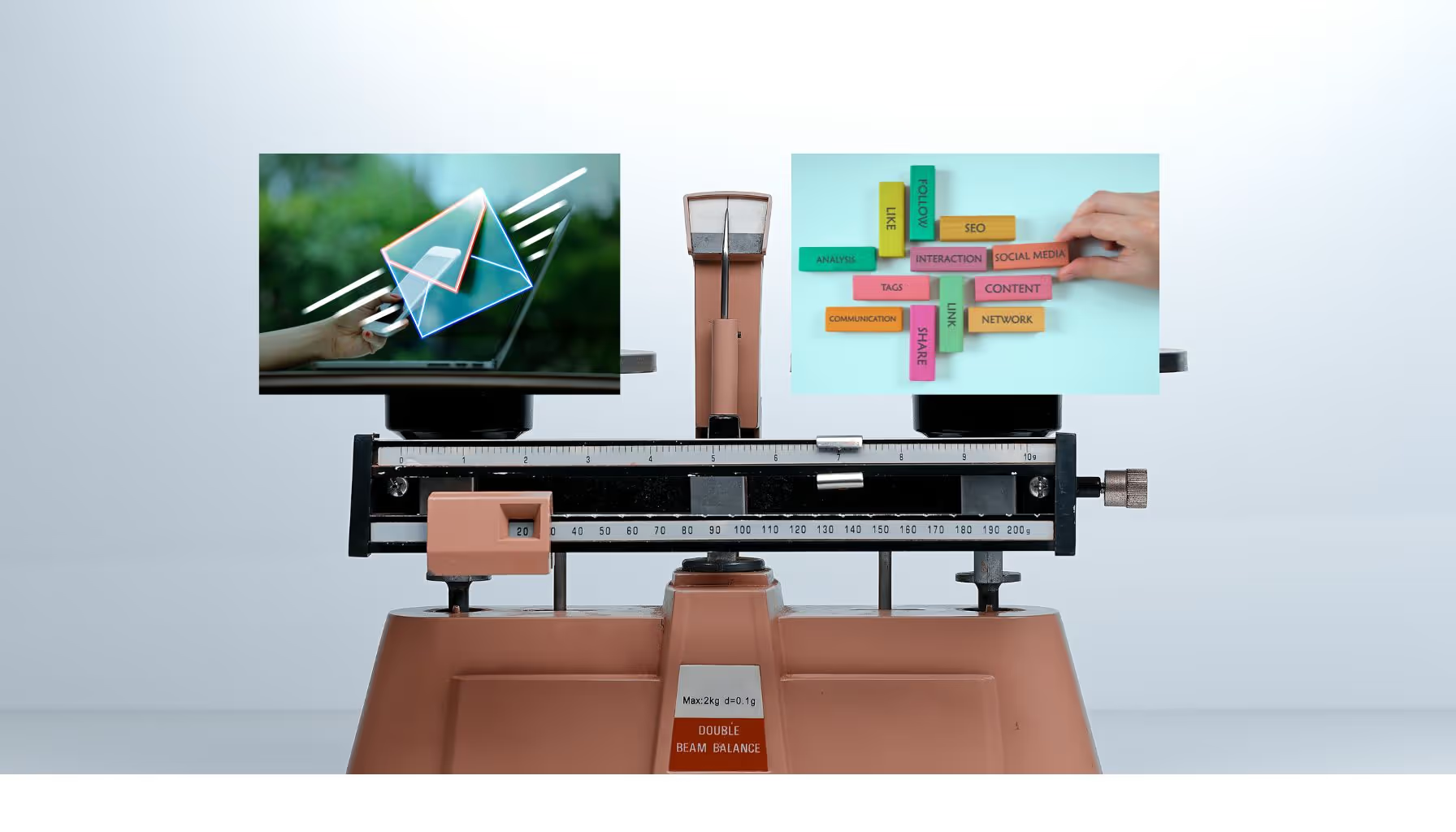
Email Marketing vs. Social Media Marketing — Which Should I Use?
Email Marketing Series – #1: Crafting an Effective Email Marketing Strategy
Email Open Rate: A Practical Guide
3 Effective Strategies to Make Email Your Marketing Heavyweight Champion

How to Attract New Leads with Video in Your Email Marketing
How to Determine the Profitability of Your eCommerce Website
Multi-Channel eCommerce: The Key to Growing Your Online Business
Understanding eCommerce Conversion Rate & Optimization
How to Optimize Your eCommerce Website for More Conversions
Top 3 eCommerce and Digital Marketing Trends for 2025

Optimizing Your Email Marketing Strategy: A/B Testing Explained
35 Eye-Opening Email Marketing Stats You Need to Know
7 Email Marketing Tips to Boost Your SEO
11 Common Email Marketing Mistakes That Are Tanking Your Conversions (And How to Fix Them)
Strategic SEO Tips for Email Marketing: Boost Engagement and ROI
How to Measure and Increase Email Marketing ROI (Plus Templates That Convert!)

Do Lifecycle Email Campaigns Really Drive Conversions? Here’s What We Found
How to Use Remailing in Your Email Marketing Strategy


Not Sure Where to Start?
Let's find the biggest retention opportunities in your business. Get a free Klaviyo audit or retention consultation.